CTEV Foot Deformity Correction for clubfoot in children
A gentle, mostly non-surgical method that straightens a clubfoot step by step with casts, so your child can stand, walk and run in normal footwear.
What CTEV (clubfoot) is and how it is corrected
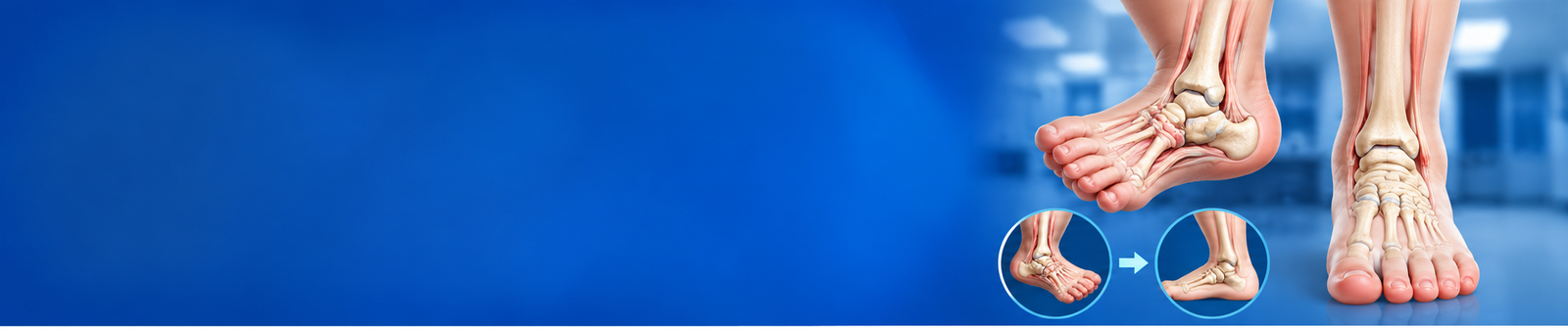
CTEV, or congenital talipes equinovarus, is a birth condition where one or both feet are turned inward and downward. With early, gentle correction the foot can be brought into a normal, flat-standing position.
-
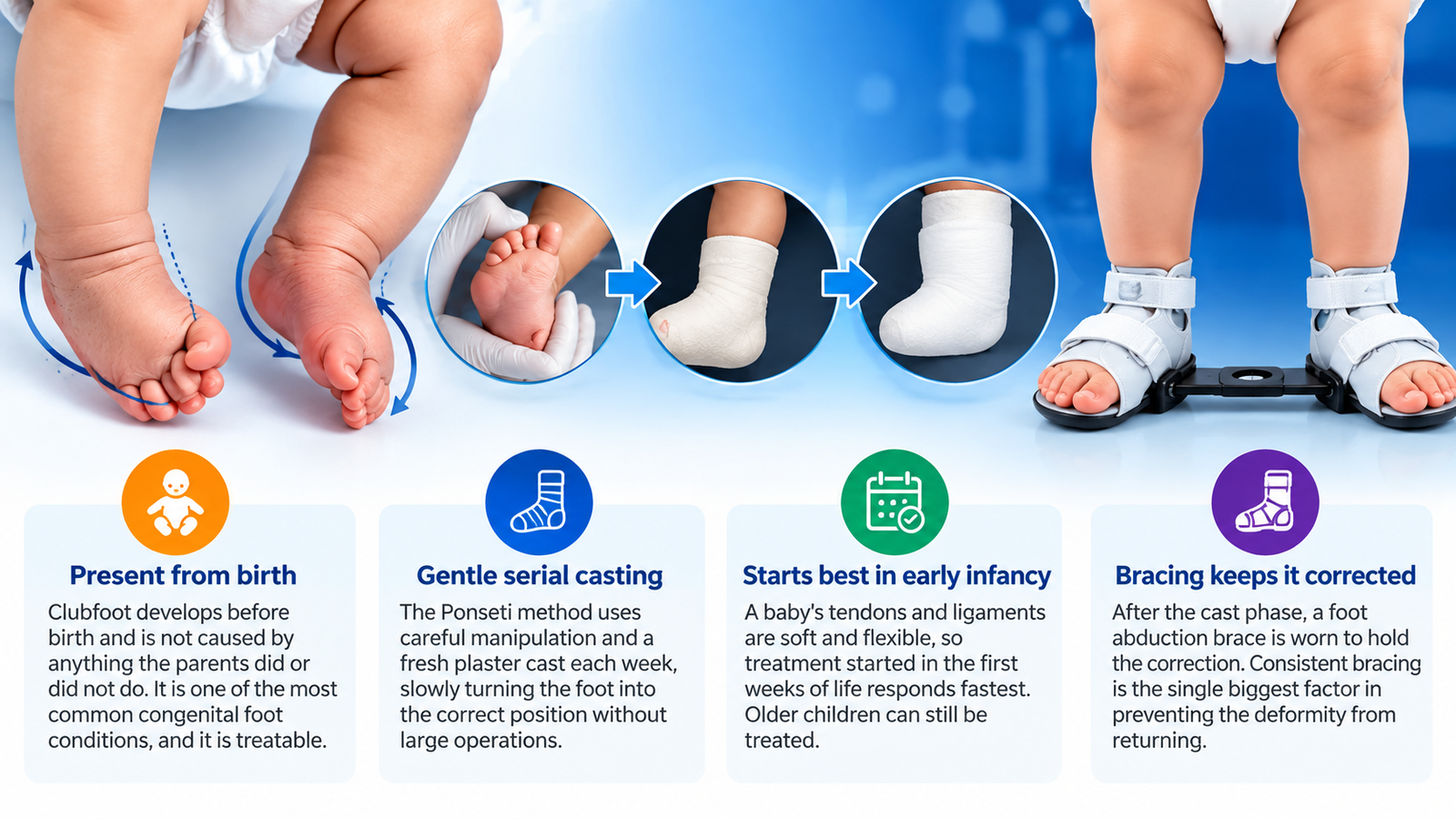
Present from birth
Clubfoot develops before birth and is not caused by anything the parents did or did not do. It is one of the most common congenital foot conditions, and it is treatable.
-
Gentle serial casting
The Ponseti method uses careful manipulation and a fresh plaster cast each week, slowly turning the foot into the correct position without large operations.
-
Starts best in early infancy
A baby's tendons and ligaments are soft and flexible, so treatment started in the first weeks of life responds fastest. Older children can still be treated.
-
Bracing keeps it corrected
After the cast phase, a foot abduction brace is worn to hold the correction. Consistent bracing is the single biggest factor in preventing the deformity from returning.
Foot deformities this treatment is built for
The ideal time to begin. Casting started in the first weeks of life gives the most predictable correction.
When both feet are affected, they are usually corrected together in the same weekly visits.
Children who were not treated early and present late. Casting often still helps, and some may need additional procedures.
Deformity that returns after earlier correction, most often when bracing was stopped too soon.
Clubfoot that occurs along with another condition. These feet can be stiffer, so the plan is tailored to the child.
Leftover problems such as an inward-turning forefoot or a foot that does not fully flatten, needing extra correction.
How clubfoot correction is carried out
Every child is assessed individually, but the sequence below is how most CTEV corrections using the Ponseti method are carried out.
Assessment and scoring
The doctor examines the foot, grades how stiff and severe the deformity is, and explains the full plan to the parents before starting.
Manipulation and weekly casting
The foot is gently stretched into a better position and held in a long-leg plaster cast. The cast is changed each week, with a little more correction every time.
Achilles tenotomy
In most children the heel cord is tight. A very small, quick procedure releases it to let the heel come down, followed by a final cast.
Final cast
The last cast stays on for about three weeks while the tendon heals, holding the foot in the corrected position.
Bracing and follow-up
A foot abduction brace is then worn full-time for the first few months, followed by night-time use for several years, with regular check-ups to catch any relapse early.
What children gain from early clubfoot correction
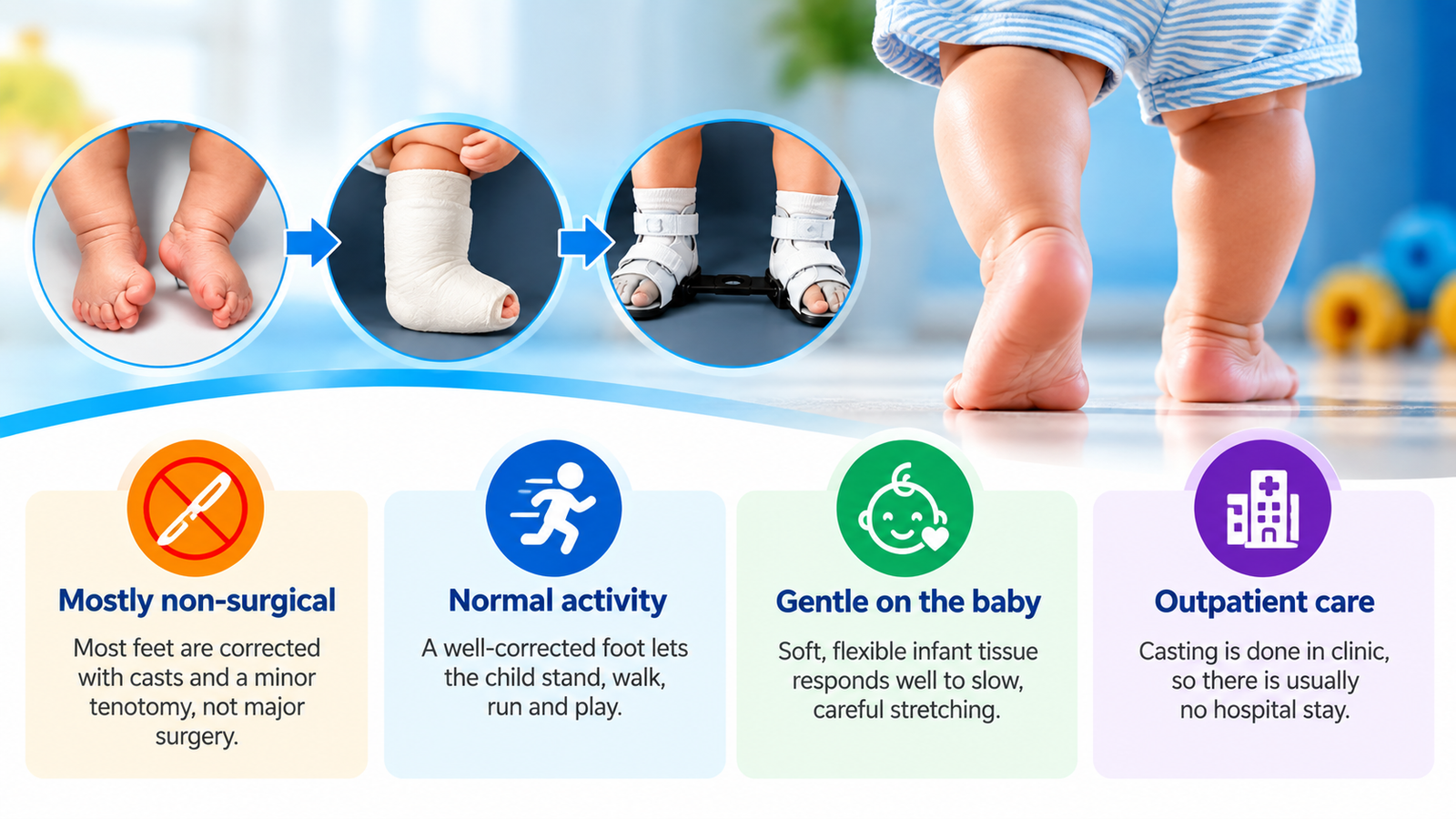
Most feet are corrected with casts and a minor tenotomy, not major surgery.
A well-corrected foot lets the child stand, walk, run and play.
Soft, flexible infant tissue responds well to slow, careful stretching.
Casting is done in clinic, so there is usually no hospital stay.

Dr. Lakshmikanth Reddy K
M.B.B.S., D.Ortho, DNB (Ortho) — Consultant Orthopaedic Surgeon, Specialist in Trauma & Limb Reconstruction and Deformity Correction (Ilizarov Technique)
Foot deformity care led by a dedicated deformity correction specialist
Dr. Lakshmikanth Reddy K has special expertise in limb reconstruction and deformity correction, including the Ilizarov technique, and treats foot deformities such as CTEV in infants and children.
Every child is assessed individually so the right plan is chosen from the start, with clear guidance for parents on casting, bracing and follow-up visits throughout treatment.
Frequently asked questions
No. CTEV develops before birth and is not caused by anything the parents did. In most children the exact cause is unknown, and the condition is very treatable.
As early as possible, ideally within the first few weeks of life. Older children can still be treated, but correction may take longer and sometimes needs extra procedures.
The stretching is gentle and babies may fuss during the cast change, but it is not considered a painful treatment. Feeding the baby during the visit often helps keep them calm.
The brace is usually worn most of the day for the first few months, then at night and during naps for several years. Skipping the brace is the most common reason the foot turns in again.
Most children need only casting and a small Achilles tenotomy. Larger surgery is considered only for stiff, neglected or relapsed feet that do not respond to casting, and this is discussed with you in advance.
With full treatment and consistent bracing, most children walk, run and play normally in regular shoes. The treated foot may stay slightly smaller or stiffer than the other side, which is expected.
Book a consultation for your child's foot
Fill in your details below. When you submit, it opens WhatsApp with your appointment request ready to send to our care team.
- Response within 24 hours
- Bring any previous reports or photos of the foot, if available
- Newborns can be brought in as early as possible