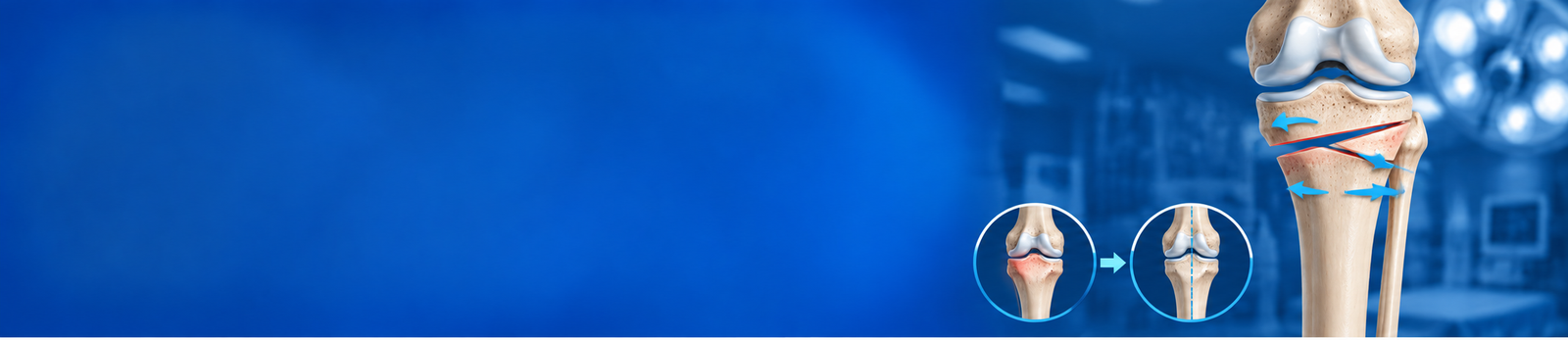
High Tibial Osteotomy Surgery for bow-leg knee pain
A joint-preserving operation that realigns the shin bone to shift body weight away from the worn part of the knee, relieving pain while keeping your own joint.
What high tibial osteotomy actually does
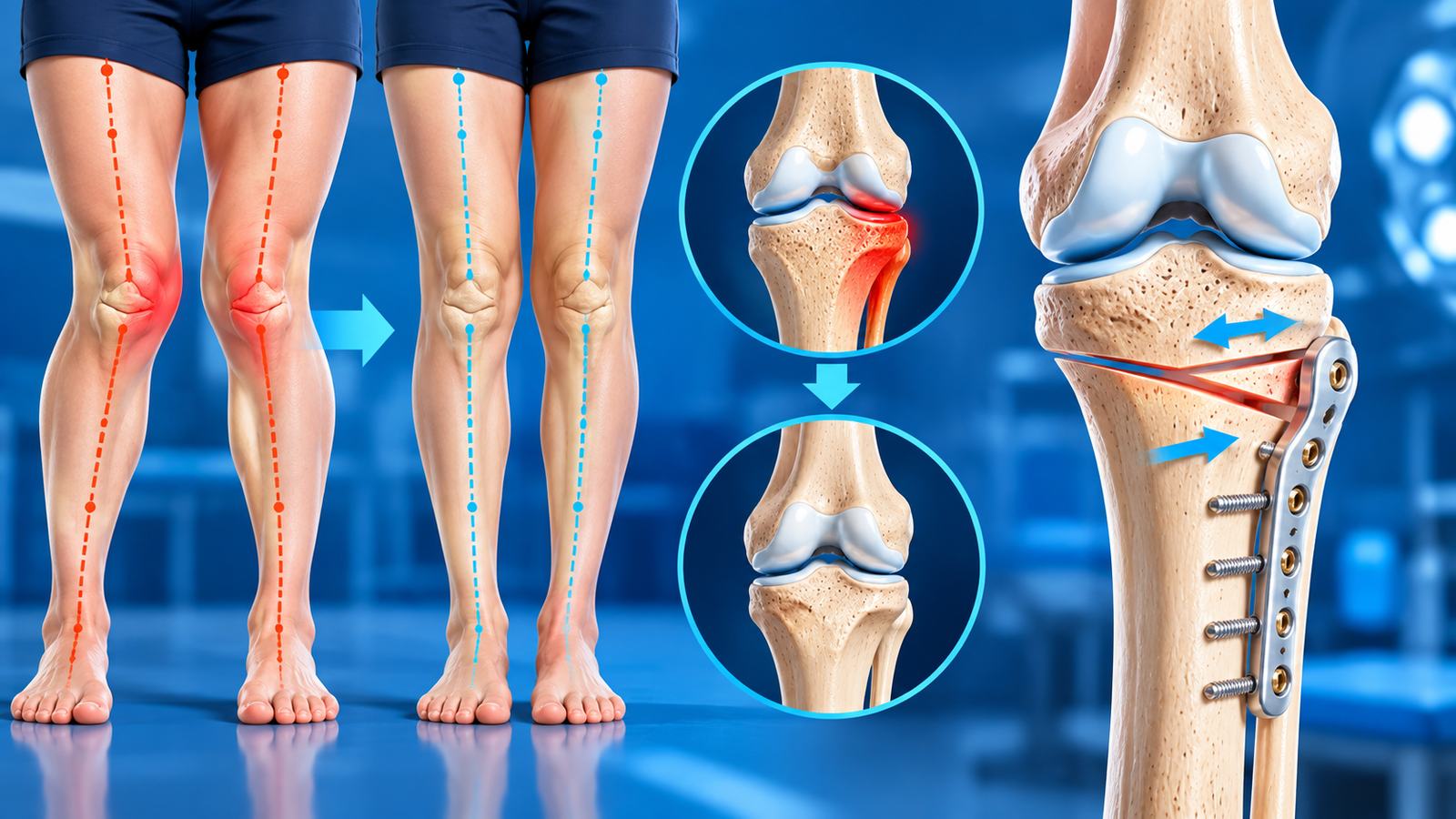
In bow-legged knees, body weight falls mostly on the inner side of the joint and wears it out. A precise cut and realignment of the upper shin bone moves that load to the healthier outer side of the knee.
-
Shifts the weight, not the joint
Instead of replacing the knee, the surgeon changes the angle of the leg so that the worn inner compartment carries less load and pain eases.
-
Secured with a locking plate
Once the bone is realigned, a specially designed plate and screws hold the new position firmly while the bone heals.
-
Planned before the first cut
Full-length standing X-rays are used to measure the deformity and calculate exactly how much correction the leg needs.
-
Can delay knee replacement
For the right patient, HTO relieves pain and keeps the natural knee working, which can put off a knee replacement for many years.
Knee problems this surgery is built for
Wear and pain concentrated on the inner (medial) side of the knee, with the outer side still healthy.
Legs that curve outward at the knees, placing extra load on the inside of the joint with every step.
Younger, active patients who want to avoid or postpone a knee replacement and keep moving.
Localised inner-side cartilage injury, where realigning the leg protects the area during healing.
Knees that feel unstable partly because of leg alignment, where correcting the angle improves the outcome of ligament care.
Angular deformity of the upper shin bone left behind by an earlier fracture that healed in a poor position.
What happens on the day of surgery
Every case is planned around your own leg alignment and knee condition, but the sequence below is how most high tibial osteotomies are carried out.
Anaesthesia and positioning
You are given spinal or general anaesthesia and positioned on the operating table. A knee arthroscopy may be done first to check the joint and treat any cartilage problem.
Bone cut (osteotomy)
Through an incision on the upper inner shin, the surgeon makes a precise cut in the tibia just below the knee, guided by C-arm X-ray imaging.
Realigning the leg
The cut is gently opened to the planned angle (or a small wedge is removed), straightening the leg and moving weight toward the healthier outer side of the knee.
Plate fixation
A locking plate and screws hold the corrected position. Bone graft or a bone substitute may be placed in the gap to support healing.
Closure and imaging
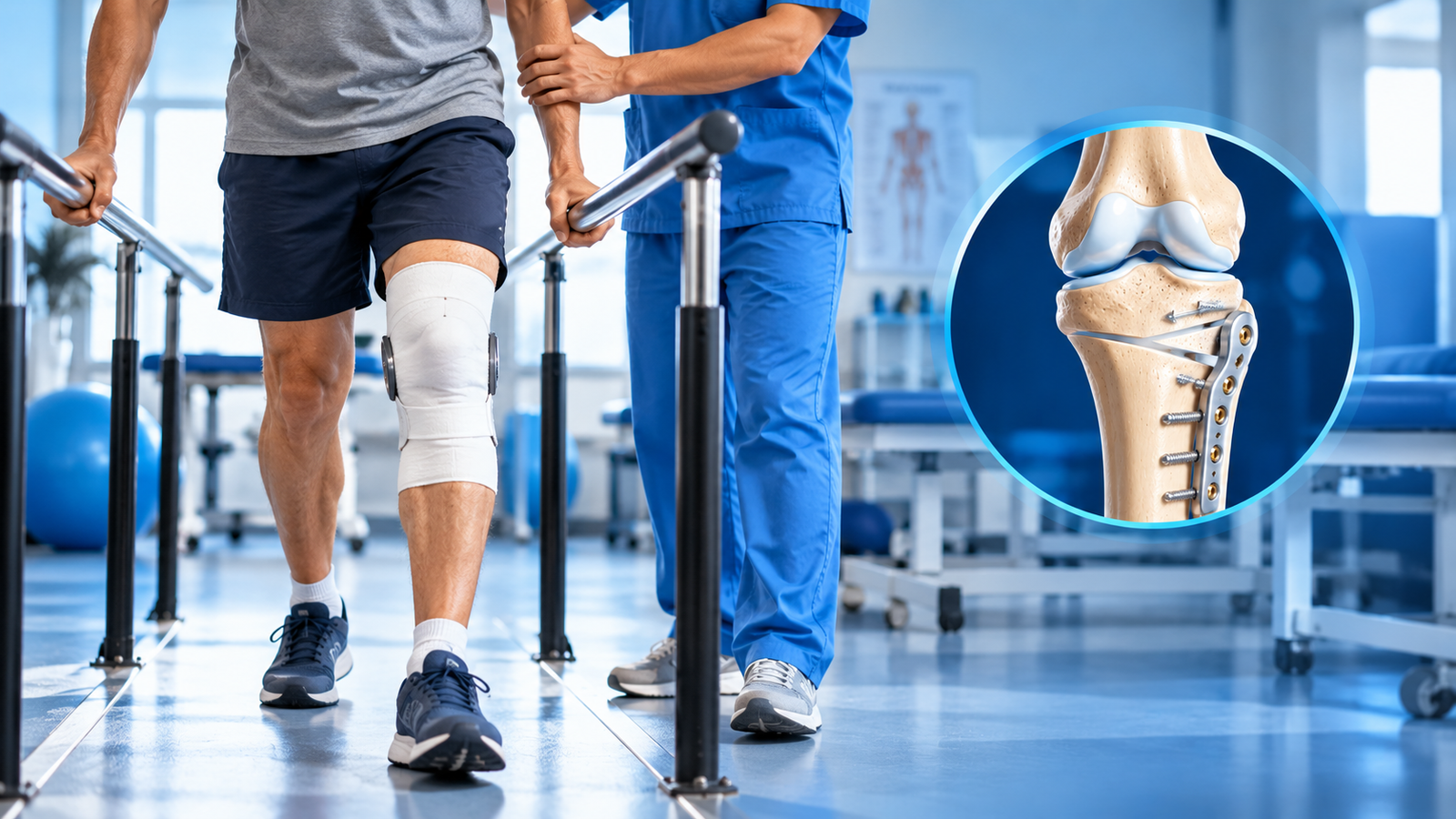
The wound is closed and final X-rays confirm the new alignment. Physiotherapy begins early, with a weight-bearing plan guided by your surgeon.
What patients gain from knee-preserving surgery
Your natural joint, ligaments and feel of the knee are preserved.
Suited to active patients who want to stay on their feet and keep moving.
Treats the alignment problem behind the wear, not just the pain.
Can postpone the need for a total knee replacement by many years.

Dr. Lakshmikanth Reddy K
M.B.B.S., D.Ortho, DNB (Ortho) — Consultant Orthopaedic Surgeon, Specialist in Trauma & Limb Reconstruction and Deformity Correction (Ilizarov Technique)
Knee alignment surgery led by a deformity correction specialist
Dr. Lakshmikanth Reddy K has special expertise in limb reconstruction and deformity correction, including the Ilizarov technique, which gives him a strong base in planning and performing realignment surgery such as high tibial osteotomy.
Every case is planned on full-length standing X-rays and clinical assessment to decide whether HTO is right for you, how much correction is needed, and how your rehabilitation should progress from day one.
Frequently asked questions
HTO suits relatively young, active patients with bow-leg alignment and wear mainly on the inner side of the knee. It is usually not suitable for widespread arthritis across the whole joint, and your surgeon will confirm this after examination and X-rays.
A knee replacement removes the damaged joint surfaces and replaces them with an implant. HTO keeps your own joint and instead realigns the leg so the load moves off the worn area. It is generally aimed at younger, more active patients.
The bone needs time to heal in its new position, so walking is usually protected with crutches for the first several weeks, based on your surgeon's advice. Many patients return to everyday activities in a few months, and full recovery can take longer.
Not necessarily. Many patients keep the plate permanently. It can be removed after the bone has fully healed if it causes irritation or discomfort.
As with any surgery, risks include infection, delayed or incomplete bone healing, loss of the planned correction, blood clots, and nerve or blood vessel injury. Your surgeon will go through these with you before surgery.
Desk-based work is often possible after a few weeks once pain is controlled and you can move safely with support. Physically demanding jobs and sports need a longer break, guided by healing seen on X-rays.
Book a consultation for your knee pain
Fill in your details below. When you submit, it opens WhatsApp with your appointment request ready to send to our care team.
- Response within 24 hours
- Bring existing knee X-rays or MRI scans, if any
- Wear comfortable clothing that lets the knee be examined