
Interlocking Nail Fixation for long bone fractures
A closed, minimally invasive technique that stabilises fractures of the femur, tibia and humerus from the inside.
What interlocking nail fixation actually does
A titanium or stainless-steel rod is passed through the hollow core of the bone and locked at each end with screws — holding the fracture in the correct length, rotation and alignment while it heals from within.
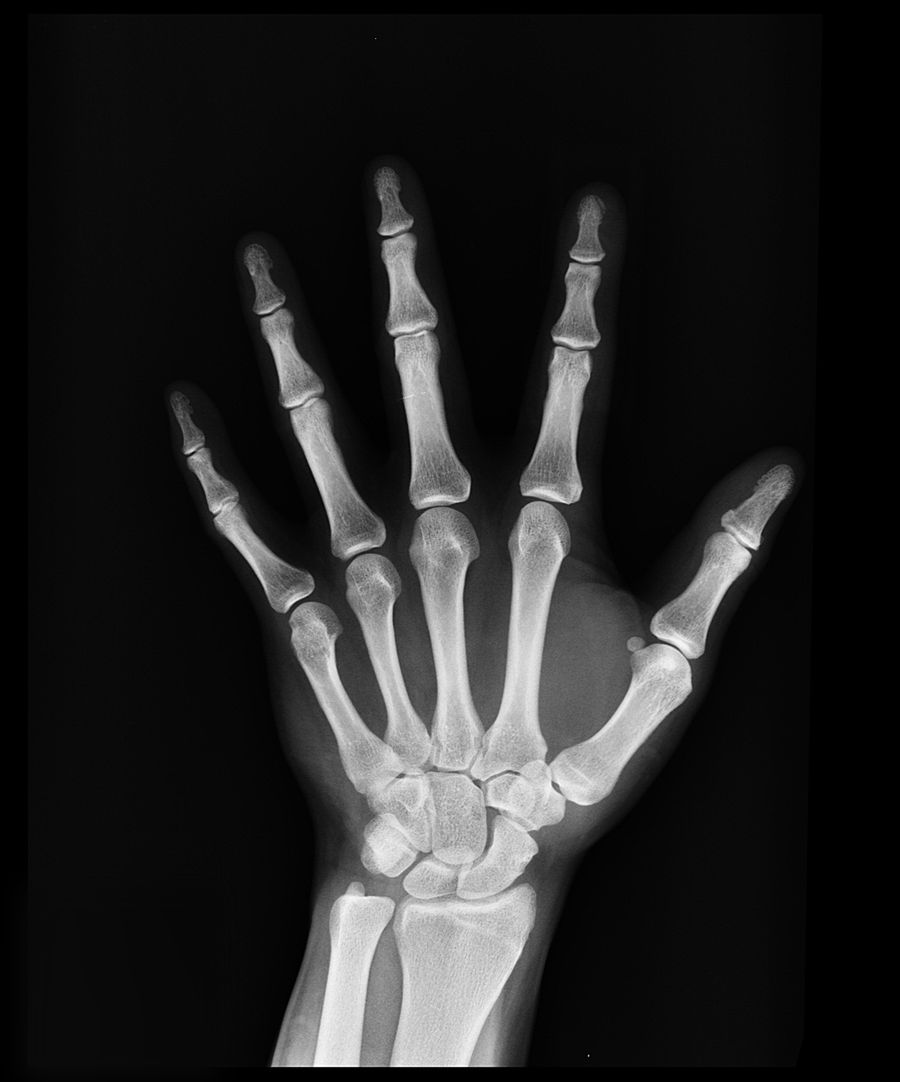
-
Load-sharing, not load-bearing
The nail sits inside the medullary canal, sharing weight with the healing bone rather than replacing it — which is why controlled early weight-bearing is usually possible.
-
Locked at both ends
Proximal and distal locking screws stop the fragment from rotating or shortening, which is what makes this technique reliable for shaft fractures in particular.
-
Closed technique
Guided by C-arm fluoroscopy, the nail is usually inserted without opening the fracture site directly — preserving the blood supply that the bone needs to heal.
-
Built to be removed
Once the bone has united, the implant can be removed as a day-care procedure if needed, though many patients choose to leave it in place long-term.
Fractures this technique is built for
The most common indication — road traffic injuries and falls that break the thigh bone along its length.
Shin bone breaks, including many open fractures once the wound is stable enough for internal fixation.
Upper-arm breaks where nailing avoids a large open incision near the shoulder or elbow.
Older fractures that have failed to heal with other methods, where a nail can restore stability and stimulate union.
Bone weakened by a pre-existing condition, where a nail supports the entire length of the shaft.
A new break occurring near an existing plate or joint replacement, needing fixation that spans the weakened zone.
What happens on the day of surgery
Every case is planned around your specific fracture pattern, but the sequence below is how most interlocking nail procedures are carried out.
Anaesthesia and positioning
You're given spinal or general anaesthesia and positioned on a traction table so the fracture can be aligned before the nail is inserted.
Fracture reduction
The surgeon brings the broken ends of the bone back into alignment, checking position continuously on the C-arm image intensifier.
Nail insertion
A small entry point is made near the joint, the canal is prepared, and the correctly sized nail is passed down through the centre of the bone.
Locking screws
Screws are placed above and below the fracture through small stab incisions, locking the nail in place and preventing rotation.
Closure and imaging
Incisions are closed with a few sutures each, and final X-rays confirm nail position and fracture alignment before you leave theatre.
What patients gain from closed nailing
Two or three short cuts instead of one long open incision.
Supported walking within a day or two of surgery.
The fracture site is rarely opened directly.
Most cases go home within two to four days.

Dr. Lakshmikanth Reddy K
M.B.B.S., D.Ortho, DNB (Ortho) — Consultant Orthopaedic Surgeon, Specialist in Trauma & Limb Reconstruction and Deformity Correction (Ilizarov Technique)
Fracture care led by a dedicated trauma specialist
Dr. Lakshmikanth Reddy K focuses on trauma and fracture surgery, with special expertise in limb reconstruction and deformity correction using the Ilizarov technique, alongside closed intramedullary nailing of the femur, tibia and humerus.
Every case is planned on pre-operative imaging to choose the right nail length, diameter and locking pattern before you ever reach the operating table, with rehabilitation planned from day one.
Frequently asked questions
A plate sits on the outer surface of the bone, while an interlocking nail runs through its hollow centre. For long shaft fractures, the nail generally carries load more evenly along the bone and needs smaller incisions than plating.
Assisted walking with crutches or a walker often starts within a day or two. Most patients return to unaided walking between 10 and 16 weeks, depending on the fracture pattern and healing.
Not necessarily. Once the fracture has united, the nail can be left in place indefinitely for most adults. Removal is considered only if it causes discomfort or restricts movement.
Either spinal or general anaesthesia may be used, depending on the fracture location and your overall health. This is discussed during your pre-operative assessment.
As with any surgery, risks include infection, delayed union, implant irritation, or nerve and vessel injury — though these are uncommon with closed nailing.
Desk-based work is often possible within 3–4 weeks once pain settles. Physically demanding jobs typically require a longer break, guided by healing seen on X-rays.
Book a consultation for your fracture
Fill in your details below. When you submit, it opens WhatsApp with your appointment request ready to send to our care team.
- Response within 24 hours
- Bring existing X-rays or scans, if any
- Emergency fractures are seen the same day