
Spine Fixation — restoring stability to a damaged spine
A precise surgical approach that stabilises the spine with screws and rods after a fracture, instability or deformity — protecting the spinal cord and nerves while restoring alignment and function.
What Spine Fixation actually involves
Spine fixation uses screws, rods or plates to hold unstable spinal segments securely in place while the bone fuses, correcting alignment and taking pressure off the spinal cord and nerves. It's used for fractures, instability, deformity or when the spine can no longer support itself safely.

-
Thorough pre-surgical workup
X-rays, joint alignment assessment and fitness evaluation confirm exactly which spinal levels are unstable and guide the surgical plan.
-
Total or partial replacement
Screws are placed into the vertebrae and connected with rods to hold the spine rigid while the bone heals and fuses.
-
Motion restored, not just pain reduced
The goal is restoring a stable, well-aligned spine that protects the spinal cord and nerves and relieves the pain caused by instability.
-
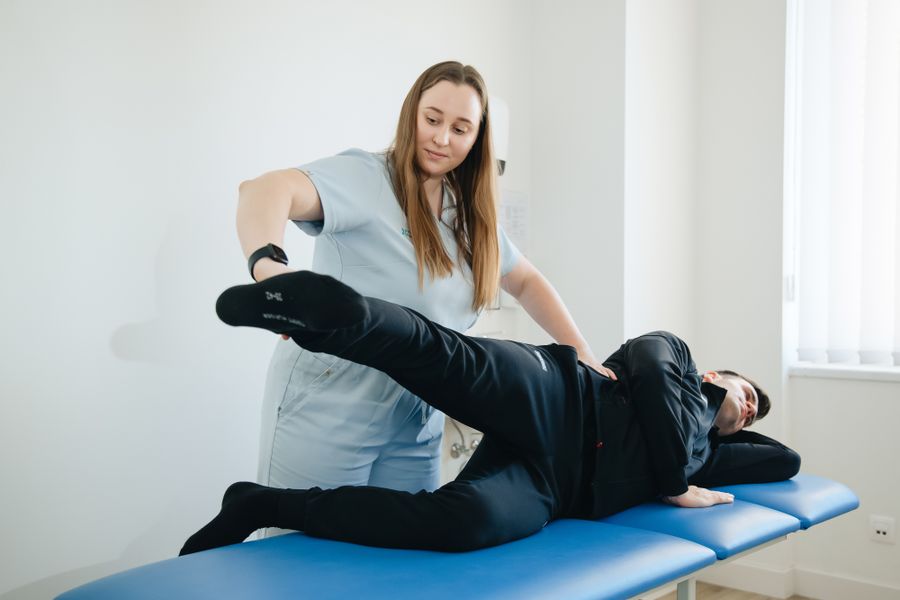
Structured rehabilitation
A guided physiotherapy programme starts within a day of surgery, building strength and range of motion in a controlled way.
When Spine Fixation is needed
A spinal fracture from trauma or a fall, where the bone's ability to support the spine safely has been compromised.
Spondylolisthesis, where one vertebra has slipped forward on another, causing pain or nerve compression.
Ligament or bone damage that leaves the spine unable to hold its normal alignment under everyday load.
Advanced disc or joint wear that has led to abnormal spinal movement and persistent nerve-related pain.
Curvature such as scoliosis or kyphosis that is progressing or causing pain, imbalance or breathing difficulty.
A spine that hasn't stabilised or fused properly after an earlier procedure and needs a more definitive fixation.
How Spine Fixation is carried out
The sequence below is how most spine fixation cases are worked through, from first visit to returning to daily activity.
Evaluation & planning
Examination and X-rays confirm the extent of joint damage and assess the spine, and CT or MRI imaging confirms the exact levels involved and the fixation approach needed.
Pre-surgical fitness check
Blood work, anaesthesia assessment and, where needed, cardiac or neurological clearance confirm you're ready for a longer surgery under general anaesthesia.
The surgery itself
Screws and rods are precisely placed to stabilise the affected vertebrae, with the procedure typically taking 2–4 hours depending on the number of levels involved.
Early mobilisation
Standing and walking with support, often with a brace, usually begin within a day or two of surgery, guided closely by the surgical team.
Recovery & follow-up
A structured rehabilitation plan and scheduled imaging reviews track fusion progress, strength and a safe return to daily activity over the following months.
What patients gain from Spine Fixation
Stabilising the spine relieves the mechanical pain caused by abnormal movement between vertebrae.
Rigid fixation protects the spinal cord and nerves from further injury while the bone heals and fuses.
Correcting alignment can relieve nerve compression symptoms such as radiating pain, numbness or weakness.
A stable, fused spine gives a durable, long-term foundation for return to daily activity.

Dr. Lakshmikanth Reddy K
M.B.B.S., D.Ortho, DNB (Ortho) — Consultant Orthopaedic Surgeon with particular experience in spinal fixation for trauma, instability and deformity, including pedicle screw fixation and fusion surgery
Spine fixation surgery led by an experienced orthopaedic surgeon
Dr. Lakshmikanth Reddy K evaluates each spine carefully, using detailed imaging alongside neurological examination to confirm fixation is the right approach before recommending surgery.
Every plan is tailored to your specific spinal condition, overall health and functional goals, with a rehabilitation pathway geared toward a safe, steady recovery.
Frequently asked questions
Initial hospital recovery is usually 4–7 days, with most patients returning to light daily activity within 6–12 weeks. Full bone fusion typically takes 3–6 months, during which activity is gradually increased under guidance.
Most patients walk with support within a day of surgery, manage stairs within a couple of weeks, and resume most daily activities within 6–12 weeks, with strength continuing to improve for several months.
Often yes, for a period during early healing, to support the spine while fusion progresses. Your surgeon will advise on the type and duration based on your specific surgery.
Physiotherapy is essential — it rebuilds strength and range of motion around the new joint and is one of the biggest factors in how well and how quickly a patient recovers.
In most cases, no — the hardware is designed to stay in permanently once fusion is complete, unless it causes specific problems that need addressing.
Spine fixation is a well-established procedure performed regularly for trauma, instability and deformity. Your surgeon will review your specific health factors, imaging and risks in detail before surgery.
Book a consultation for Spine Fixation
Fill in your details below. When you submit, it opens WhatsApp with your appointment request ready to send to our care team.
- Response within 24 hours
- Bring existing X-rays or scans, if any
- Suspected spinal injuries are assessed urgently