
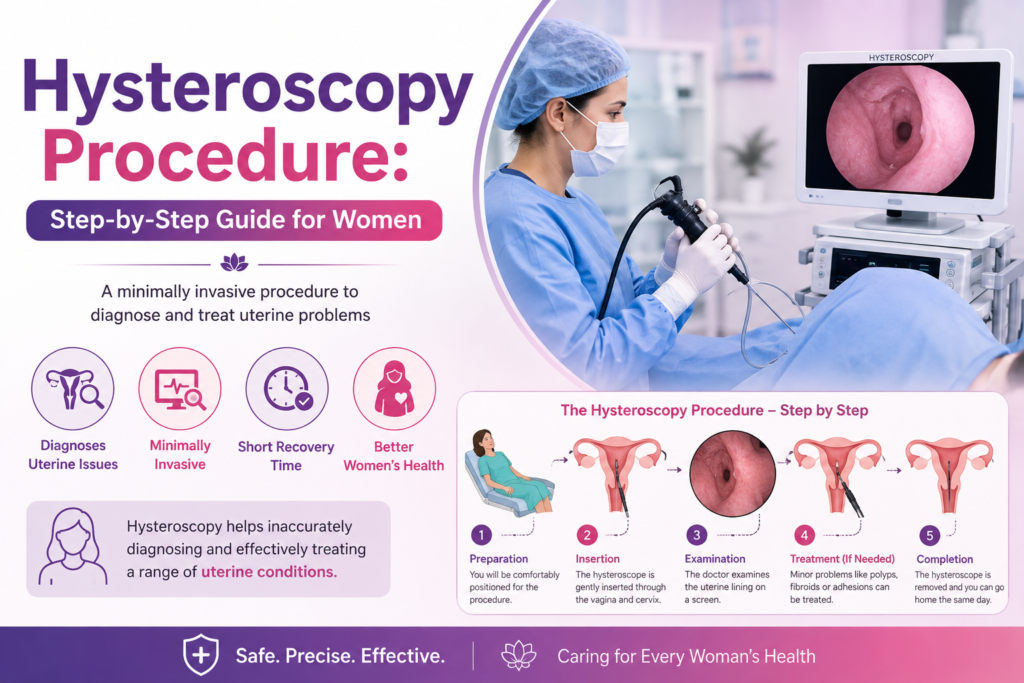
Hysteroscopy Procedure is a minimally invasive gynecological procedure that allows a doctor to look directly inside the uterus using a thin, lighted instrument called a hysteroscope. It can help doctors understand the reason behind certain uterine problems and, in some cases, treat the problem during the same procedure.
If your gynecologist has suggested a Hysteroscopy Procedure, it is completely normal to have questions. Why is it needed? Is it painful? How is it performed? How long does it take? Can I go home the same day?
Understanding what happens before, during, and after the procedure can make the experience feel much less stressful.
This guide explains the procedure in a simple, step-by-step way, including why hysteroscopy is recommended, how to prepare, what happens during the procedure, recovery, possible risks, and when to contact your doctor.
What Is Hysteroscopy?
Hysteroscopy is a procedure used to examine the inside of the uterus. A doctor gently passes a narrow instrument called a hysteroscope through the vagina and cervix and into the uterus.
The hysteroscope has a small camera and light, allowing the doctor to see the uterine cavity on a monitor.
Unlike traditional surgery, there is usually no abdominal incision involved.
Depending on the reason for the procedure, the doctor may use hysteroscopy only to examine the uterus or may perform treatment at the same time.
This is why a Hysteroscopy Procedure can be useful for both diagnosis and treatment of certain uterine conditions.
Why Is a Hysteroscopy Procedure Recommended?
Your gynecologist may recommend hysteroscopy when they need a clearer view of the inside of the uterus.
Common reasons include:
- Abnormal or heavy menstrual bleeding
- Bleeding between periods
- Bleeding after menopause
- Suspected uterine polyps
- Certain types of fibroids
- Scar tissue inside the uterus
- Repeated pregnancy loss in selected cases
- Difficulty becoming pregnant when a uterine problem is suspected
- An abnormal finding on an ultrasound or other imaging test
- Removal of a retained intrauterine device in selected situations
- Evaluation of abnormalities inside the uterine cavity
Your doctor may recommend hysteroscopy after reviewing your symptoms, medical history, examination, and previous test results.
Diagnostic vs Operative Hysteroscopy
Not every Hysteroscopy Procedure is performed for the same purpose.
Diagnostic Hysteroscopy
Diagnostic hysteroscopy is mainly used to look inside the uterus and identify a possible problem.
It may be recommended when other tests do not provide enough information or when your doctor wants to directly examine the uterine cavity.
Operative Hysteroscopy
Operative hysteroscopy is used when the doctor needs to treat or remove a problem during the procedure.
For example, a doctor may remove a uterine polyp, treat certain fibroids, or remove scar tissue depending on the situation.
In some cases, diagnosis and treatment can happen during the same visit.
Hysteroscopy Procedure: Step-by-Step
Knowing what happens during the procedure can help you feel more prepared.
Step 1: Consultation and Evaluation
Before the procedure, your gynecologist will discuss why hysteroscopy is being recommended and what they expect to find or treat.
You may be asked about:
- Your menstrual cycle
- Previous pregnancies
- Previous surgeries
- Current medicines
- Allergies
- Existing medical conditions
- Previous gynecological problems
- Any possibility of pregnancy
Your doctor may also review previous ultrasound reports, blood tests, or other investigations.
This is a good time to ask questions about anesthesia, recovery, medications, and when you can return to your normal activities.
Step 2: Preparing for the Procedure
Your doctor will give you specific instructions based on the type of hysteroscopy planned.
Depending on your situation, you may be advised about eating and drinking restrictions, medications, anesthesia, and arranging transportation home.
If you take blood-thinning medication or other regular medicines, tell your doctor. Do not stop any prescribed medication unless your healthcare provider tells you to do so.
The timing of the procedure may also depend on your menstrual cycle.
Step 3: Getting Ready at the Hospital or Clinic
On the day of the Hysteroscopy Procedure, you will usually be asked to change into a hospital gown.
Your healthcare team will check your basic health information and explain the procedure again.
Depending on the type of hysteroscopy and your individual needs, you may receive:
- Local anesthesia
- Sedation
- Regional anesthesia
- General anesthesia
The choice depends on the procedure, your health, and your doctor’s recommendation.
Step 4: Positioning for the Procedure
You will lie on an examination or operating table in a position similar to that used during a gynecological examination.
The doctor will gently access the vagina and cervix.
The goal is to perform the procedure as safely and comfortably as possible.
Step 5: Inserting the Hysteroscope
The doctor carefully guides the thin hysteroscope through the vagina and cervix into the uterus.
Because the hysteroscope is narrow, there is usually no need for a cut on the abdomen.
A sterile fluid may be introduced into the uterus to gently expand the uterine cavity. This helps the doctor see the uterine walls more clearly.
Step 6: Examining the Uterus
The tiny camera at the end of the hysteroscope sends images to a monitor.
The doctor can examine the uterine lining, uterine cavity, and openings of the fallopian tubes from inside the uterus.
They may look for abnormalities such as polyps, fibroids, scar tissue, or other changes.
This direct view can provide information that may not always be available through an ultrasound alone.
Step 7: Treating the Problem if Needed
If an abnormality is found and operative hysteroscopy has been planned, the doctor may use small instruments through the hysteroscope to treat it.
Depending on the condition, this can include removal of:
- Uterine polyps
- Certain fibroids
- Scar tissue
- Selected abnormal tissue
If a tissue sample is needed, it may also be collected for laboratory examination.
Step 8: Completing the Procedure
Once the examination or treatment is complete, the hysteroscope and instruments are gently removed.
The healthcare team will monitor you for a short period, particularly if you received sedation or anesthesia.
Many hysteroscopy procedures are performed as day-care procedures, meaning you may be able to return home on the same day, depending on the procedure and your recovery.
How Long Does a Hysteroscopy Procedure Take?
The duration varies depending on why the procedure is being performed.
A simple diagnostic procedure may be relatively short, while an operative procedure can take longer depending on what needs to be treated.
Your doctor can give you a more accurate estimate based on your specific procedure.
It is also important to remember that your total time at the hospital or clinic may be longer than the procedure itself, because preparation and recovery also take time.
Is Hysteroscopy Painful?
The experience varies from woman to woman.
Some women experience mild cramping or pressure, similar to menstrual cramps. Others may experience more discomfort, particularly during certain parts of the procedure.
The level of discomfort can depend on the type of hysteroscopy, whether treatment is being performed, and the type of anesthesia or pain relief used.
If you are anxious about pain, tell your doctor before the procedure. Your healthcare team can explain the available options for making the procedure more comfortable.
What Happens After a Hysteroscopy Procedure?
After the procedure, you may experience mild symptoms for a short period.
These can include:
- Mild abdominal cramps
- Light vaginal bleeding or spotting
- Feeling tired, especially after anesthesia or sedation
- Mild discomfort
These symptoms often settle as your body recovers.
Your doctor will tell you when you can return to your regular activities and whether you need to avoid anything temporarily.
Recovery After Hysteroscopy
Recovery depends on the type of Hysteroscopy Procedure you had and whether any treatment was performed.
Some women can return to normal daily activities quickly, while others may need a little more time to recover.
Your doctor may advise you to temporarily avoid certain activities, such as sexual intercourse, tampons, swimming, or strenuous exercise, depending on the procedure and your individual recovery.
Always follow the specific instructions provided by your healthcare team.
When Should You Contact Your Doctor?
Most women recover without major problems, but it is important to know the warning signs.
Contact your doctor if you develop:
- Heavy vaginal bleeding
- Severe or worsening abdominal pain
- Fever or chills
- Foul-smelling vaginal discharge
- Persistent vomiting
- Feeling unusually unwell
- Other symptoms that concern you
If symptoms are severe or sudden, seek urgent medical attention.
What Are the Possible Risks?
Hysteroscopy is generally considered a safe procedure, but like any medical procedure, it can have potential risks.
Possible complications may include:
- Infection
- Bleeding
- Injury to the cervix or uterus
- Reaction to anesthesia
- Fluid-related complications in certain procedures
- Rarely, injury to nearby organs
Your individual risk depends on your health, the type of hysteroscopy, and the treatment being performed.
Your gynecologist should explain the potential benefits and risks before you give consent.
Can Hysteroscopy Help With Infertility?
In some women, hysteroscopy may be useful when a problem inside the uterus is suspected to be affecting fertility.
Conditions such as polyps, certain fibroids, or intrauterine scar tissue may sometimes interfere with implantation or pregnancy.
If your doctor identifies and treats an appropriate uterine problem, it may help improve the uterine environment. However, hysteroscopy is not a treatment for every cause of infertility.
Fertility problems can involve the female reproductive system, male factors, ovulation, hormones, fallopian tubes, or other causes. Your doctor will recommend investigations based on your individual situation.
Can I Get Pregnant After Hysteroscopy?
For many women, pregnancy is possible after hysteroscopy.
However, when you should start trying to conceive depends on why the procedure was performed, whether treatment was done, and how quickly the uterus heals.
If you are planning pregnancy after the procedure, ask your gynecologist when it is safe to start trying.
If hysteroscopy was performed as part of fertility treatment, your doctor may also coordinate the timing with your fertility plan.
Why Choose Hysteroscopy Instead of More Invasive Surgery?
One of the major advantages of hysteroscopy is that the doctor can access the uterine cavity through the natural vaginal and cervical route, rather than making an abdominal incision.
This can mean:
- No abdominal surgical incision
- Direct visualization of the uterine cavity
- Diagnosis and treatment in selected cases
- Potentially faster recovery than some traditional surgical approaches
- Often a day-care procedure
However, hysteroscopy is not suitable for every uterine condition. Your doctor will recommend the most appropriate treatment based on your diagnosis.
Frequently Asked Questions
Is hysteroscopy a major surgery?
Hysteroscopy is generally considered a minimally invasive procedure. The complexity depends on whether it is being used only for diagnosis or to treat a condition.
Can I go home on the same day?
Many procedures are performed as day-care procedures, but this depends on the type of hysteroscopy, anesthesia, and your recovery.
Will I have bleeding after hysteroscopy?
Light bleeding or spotting can occur after the procedure. Heavy bleeding is not expected and should be discussed with your doctor promptly.
Can hysteroscopy remove fibroids?
Certain fibroids that are located inside or protrude into the uterine cavity may be suitable for removal through operative hysteroscopy. Your doctor will determine whether this approach is appropriate.
How soon can I return to work?
This varies depending on the procedure, your type of work, anesthesia, and how you feel afterward. Follow your doctor’s individual recovery advice.
Does hysteroscopy affect fertility?
Hysteroscopy itself is not generally intended to reduce fertility. In selected women, treating a uterine abnormality may actually be part of fertility care. Your doctor can explain how the procedure relates to your specific fertility goals.
Final Thoughts
A Hysteroscopy Procedure may sound intimidating when you first hear about it, but understanding the process can make it feel much more manageable.
From the initial consultation and preparation to the examination, possible treatment, and recovery, the procedure is designed to give your doctor a clearer understanding of what is happening inside the uterus.
If you have abnormal bleeding, suspected polyps or fibroids, repeated pregnancy loss, or a fertility-related uterine concern, your gynecologist may recommend hysteroscopy as part of your evaluation or treatment.
The best approach is to discuss your symptoms, concerns, medical history, and fertility goals openly with your doctor. Every woman’s situation is different, so your healthcare provider can recommend the safest and most suitable option for you.
Remember: understanding your treatment is the first step toward feeling more confident about your healthcare decisions.
This blog is intended for general educational purposes and should not be considered a substitute for personalized medical advice from a qualified gynecologist.