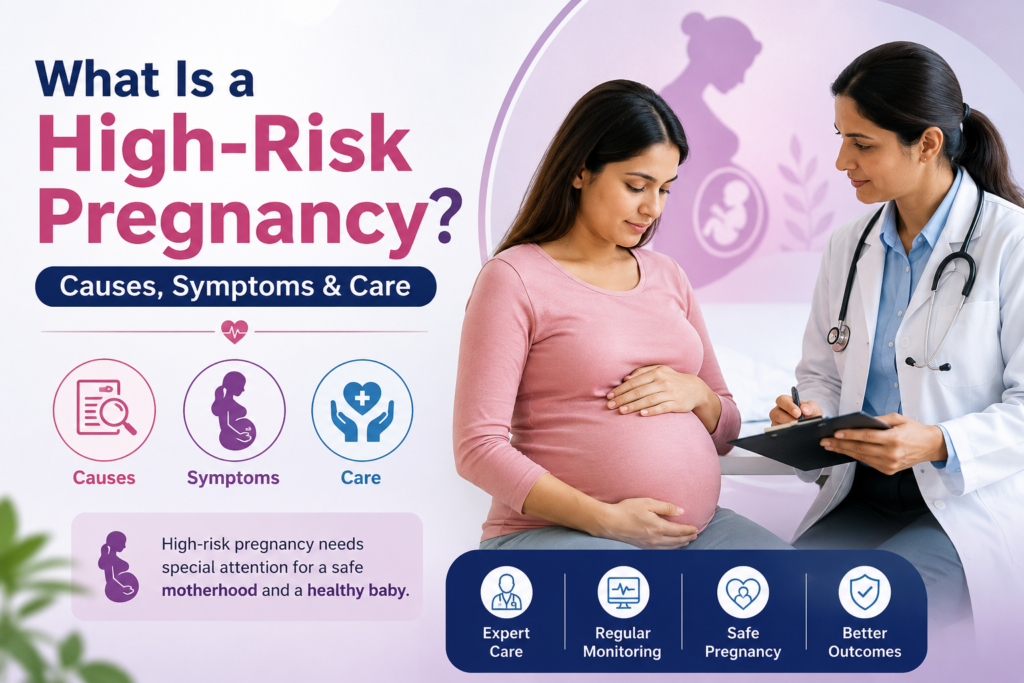
A high-risk pregnancy does not always mean something will go wrong. It simply means that the mother, baby, or both may need closer monitoring and specialized medical care during pregnancy. With regular check-ups, timely screening, and the right guidance, many women with a high-risk pregnancy go on to have healthy pregnancies and safe deliveries.
In this blog, let’s understand what makes a pregnancy high-risk, the common causes and warning signs, and how proper care can help protect both mother and baby.
What Is a High-Risk Pregnancy?
A high-risk pregnancy is a pregnancy in which there is a greater possibility of health complications affecting the mother, baby, or both. The risk may be present before pregnancy or may develop during pregnancy.
It is important to remember that being classified as high-risk does not automatically mean that you or your baby are in danger. It means your pregnancy may require more frequent check-ups, additional tests, or care from a specialist.
What Causes a High-Risk Pregnancy?
Several factors can increase the chances of a high-risk pregnancy. Some common causes include:
- High blood pressure or pregnancy-related hypertension
- Diabetes before or during pregnancy
- Previous pregnancy complications
- Multiple pregnancy, such as twins or triplets
- Pregnancy at a very young or advanced maternal age
- Previous miscarriage, premature birth, or stillbirth
- Placental problems or abnormal fetal growth
- Certain infections during pregnancy
- Existing medical conditions affecting the mother
- Problems identified during routine pregnancy scans or tests
Sometimes, a woman may have no obvious risk factors at the beginning, but complications can develop later. That is why regular antenatal care is so important.
Symptoms That May Need Medical Attention
A high-risk pregnancy does not always cause specific symptoms. In many cases, the pregnancy may feel completely normal, which makes regular medical appointments especially important.
However, certain warning signs should not be ignored. These can include:
- Heavy vaginal bleeding
- Severe or persistent abdominal pain
- Severe headache or vision changes
- Sudden swelling of the face or hands
- Difficulty breathing or chest discomfort
- Fluid leakage from the vagina
- Reduced or unusual baby movements later in pregnancy
- Fever or other signs of serious infection
If you experience any unusual or severe symptoms during pregnancy, contact your healthcare provider promptly rather than waiting for your next appointment.
How Is a High-Risk Pregnancy Managed?
Care depends on the mother’s health, pregnancy history, gestational age, and the baby’s condition. Your doctor may recommend more frequent appointments and closer monitoring.
Depending on your individual situation, care may include:
Regular antenatal check-ups: Monitoring blood pressure, weight, baby’s growth, and overall health.
Blood and urine tests: These can help identify conditions such as anemia, infections, diabetes, or other concerns.
Ultrasound and fetal monitoring: Additional scans may be advised to monitor the baby’s growth, development, blood flow, or well-being.
Specialist care: Some pregnancies may require consultation with a maternal-fetal medicine specialist or another relevant specialist.
Lifestyle and medication guidance: Your doctor may recommend specific dietary changes, activity levels, supplements, or medicines depending on your condition.
Can a High-Risk Pregnancy Be Prevented?
Not every high-risk pregnancy can be prevented because some risk factors are related to age, medical history, genetics, or previous pregnancy complications.
However, you can take steps to support a healthier pregnancy. Planning a pregnancy consultation, managing existing health conditions, taking recommended prenatal supplements, maintaining a healthy lifestyle, and attending every scheduled check-up can make a meaningful difference.
If you are planning to become pregnant and have an existing medical condition or previous pregnancy complications, speaking with your doctor before conception can be especially helpful.
When Should You See a Doctor?
If your pregnancy has been identified as high-risk, don’t panic. The most important step is to follow your doctor’s recommendations and attend all scheduled appointments.
Early identification and continuous monitoring can help doctors detect potential problems sooner and decide on the most appropriate treatment or delivery plan.
Final Thoughts
A high-risk pregnancy requires extra attention, not extra fear. Every pregnancy is different, and the level of care depends on the individual mother and baby’s needs.
With timely medical supervision, regular monitoring, and a personalized care plan, many women with a high-risk pregnancy can have positive pregnancy outcomes.
If you have concerns about your pregnancy, previous complications, or an existing medical condition, consult a qualified obstetrician for personalized advice. This article is for general education and should not replace professional medical care.
Focus Keyword: high-risk pregnancy