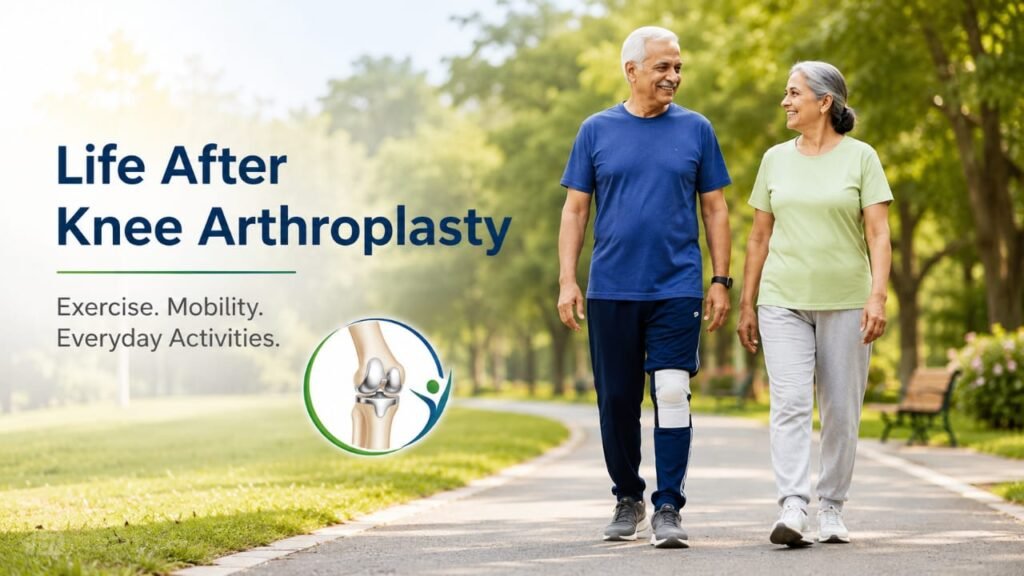
Knee replacement surgery can be a fresh start for people who have spent years dealing with knee pain, stiffness, swelling, and difficulty with everyday movement. While the surgery addresses the damaged joint, recovery continues for several weeks and months as the muscles, tissues, and overall mobility gradually improve.
Life After Knee Arthroplasty is not simply about healing the surgical area. It is about getting back to walking comfortably, becoming independent, improving strength, and returning to the activities that make everyday life enjoyable.
With appropriate physiotherapy, regular movement, a healthy lifestyle, and guidance from your orthopedic team, you can gradually build confidence in your new knee.
Getting Back on Your Feet
The first stage after surgery focuses on healing, controlling swelling, reducing discomfort, and restoring basic movement. Your healthcare team may encourage you to begin gentle movement and walking with support as appropriate for your condition.
A walker or cane may be needed initially. Using a walking aid is not a sign that recovery is going poorly—it simply provides stability while your muscles and balance regain strength.
You may notice stiffness after sitting or resting for a while. Simple movements may also feel tiring in the beginning. These experiences can improve as your activity level gradually increases.
During Life After Knee Arthroplasty, it is important to follow the recovery plan given by your surgeon and physiotherapist. Your progress may be different from another patient’s because recovery depends on age, general health, muscle strength, activity level, and the condition of the knee before surgery.
Small improvements every day can add up to significant progress over time.
Exercise That Supports Recovery
Exercise is one of the most important parts of Life After Knee Arthroplasty. A suitable rehabilitation program can help improve muscle strength, knee flexibility, balance, coordination, and walking ability.
Your physiotherapist may recommend exercises based on your recovery stage. These can include gentle knee-bending movements, quadriceps strengthening, straight-leg exercises, ankle movements, walking practice, and gradually progressing strengthening activities.
Exercise should be increased step by step. Trying to do too many repetitions or suddenly increasing the intensity may cause unnecessary soreness and swelling.
Your physiotherapist may also teach you how to perform everyday movements safely, such as getting up from a chair, entering and leaving a bed, and using stairs.
Consistency is more important than intensity. A regular rehabilitation routine is generally more useful than occasional, demanding workouts.
Walking With More Confidence
Walking is a major milestone during Life After Knee Arthroplasty. It allows you to rebuild strength while gradually becoming more comfortable with everyday movement.
At first, you may walk short distances using a walker or cane. As your balance and leg strength improve, your healthcare team may guide you toward walking with less assistance.
Try to focus on safe, controlled steps rather than walking long distances too quickly. Good posture and proper walking technique can also help reduce unnecessary strain.
As your mobility improves, activities such as standing for longer periods, getting up from a chair, turning, walking outdoors, and climbing stairs can become easier.
If you notice increasing pain, significant swelling, or difficulty walking after increasing your activity, speak with your physiotherapist. Your exercise or walking routine may need to be adjusted.
Returning to Everyday Life
One of the biggest goals of Life After Knee Arthroplasty is returning to the activities you perform every day.
Simple tasks such as cooking, dressing, bathing, shopping, preparing meals, and moving around the house may gradually become easier. Depending on your recovery, you may later return to work, driving, travel, and other regular activities.
If your job involves sitting for long periods, standing, climbing stairs, lifting, or physical labor, your return-to-work plan may need to be adjusted.
It is helpful to break demanding activities into smaller tasks. Taking short rest periods can prevent unnecessary fatigue during the early recovery stage.
Your doctor can advise you when specific activities are safe. Do not use another person’s recovery timeline as your own benchmark.
Choosing the Right Activities
Being active is an important part of Life After Knee Arthroplasty, but the type of activity matters.
Once your doctor gives you clearance, low-impact activities may be suitable for many people. These can include walking, stationary cycling, swimming, and selected strengthening exercises.
These activities can help maintain fitness without placing excessive impact on the knee.
However, activities involving repeated jumping, running, sudden twisting, heavy impact, or a high risk of falling may not be appropriate for everyone.
If you enjoy sports or physically demanding hobbies, discuss your plans with your orthopedic specialist. Your doctor can help you understand which activities are suitable and whether modifications are needed.
Managing Pain & Swelling
Pain and swelling are common parts of recovery, particularly after surgery or increased physical activity. The amount of discomfort can vary from person to person and may change as activity levels increase.
Your healthcare team may recommend ice, elevation, rest, physiotherapy, and prescribed medication depending on your individual needs.
Do not ignore persistent or worsening symptoms. Increasing pain, significant swelling, fever, wound drainage, or a sudden change in your ability to walk should be discussed with your healthcare provider.
A useful approach is to increase activity gradually and give your knee enough time to recover between more demanding activities.
Caring for Your Knee in the Long Term
Life After Knee Arthroplasty continues long after the initial rehabilitation period. Once you are comfortable with your daily routine, maintaining good habits can help support long-term mobility.
Regular, suitable physical activity helps maintain the strength of the muscles surrounding the knee. Maintaining a healthy weight can also reduce unnecessary stress on the joints and make movement easier.
Continue the exercises recommended by your physiotherapist, especially if they help maintain strength and flexibility.
Regular follow-up appointments are also important. Your orthopedic specialist can assess your progress and address any concerns related to pain, movement, or your replaced knee.
Good long-term care is not about avoiding movement—it is about choosing the right movement and staying consistently active.
Building Confidence in Daily Movement
Physical recovery is only one part of Life After Knee Arthroplasty. Confidence also plays an important role.
After living with knee pain for a long time, you may naturally feel cautious about walking, using stairs, or trying activities you previously avoided. Gradually returning to movement can help rebuild that confidence.
Start with activities you can perform safely and comfortably. As your strength improves, you can gradually challenge yourself under professional guidance.
Don’t be discouraged by slower days. Recovery is rarely a perfectly straight line, and occasional stiffness or tiredness does not necessarily mean you are going backward.
When Should You Contact Your Doctor?
Most people recover well after knee replacement, but certain symptoms should be evaluated promptly.
Contact your healthcare provider if you experience:
- Severe or increasing knee pain
- Significant or rapidly increasing swelling
- Fever or chills
- Redness or discharge around the surgical wound
- Sudden calf pain or swelling
- New or worsening difficulty walking
- Sudden shortness of breath or chest pain
These symptoms may require medical assessment. If symptoms are severe or sudden, seek urgent medical attention rather than waiting for a routine appointment.
A More Active Life Starts With Small Steps
Life After Knee Arthroplasty can be a positive transition toward better mobility, greater independence, and improved quality of life.
Recovery takes patience. Some days may feel easier than others, and progress can sometimes seem slow. What matters is staying consistent with your rehabilitation, gradually increasing activity, and keeping in touch with your healthcare team.
You do not need to rush toward the finish line. Every comfortable walk, every strengthening exercise, and every improvement in daily movement is part of the recovery journey.
Move gradually. Strengthen consistently. Listen to your body.
Every step forward is a step toward greater freedom and confidence.