
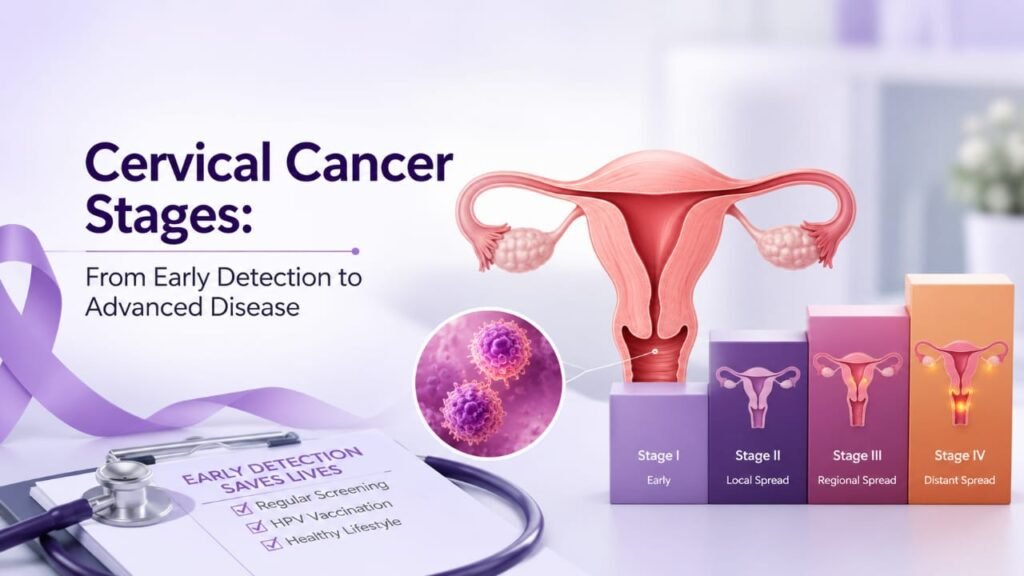
Cervical cancer is a type of cancer that develops in the cells of the cervix, the lower part of the uterus that connects to the vagina. When cervical cancer is diagnosed, one of the most important things doctors need to determine is how far the disease has progressed.
This is where Cervical Cancer Stages become important. Staging helps doctors understand the size and location of the cancer, whether it has spread to nearby tissues or lymph nodes, and whether it has reached other parts of the body.
Knowing the stage helps the medical team choose an appropriate treatment plan and gives patients a clearer understanding of their condition.
Why Are Cervical Cancer Stages Important?
Cervical Cancer Stages describe how far the cancer has developed or spread from where it originally started.
Doctors use information from pelvic examinations, biopsies, imaging tests, and other investigations to determine the stage. The exact tests required can vary depending on the individual situation.
Staging is important because cervical cancer caught at an earlier stage may be treated differently from cancer that has spread beyond the cervix.
However, a cancer stage is not a prediction of one person’s exact outcome. Every patient’s situation is different.
How Is Cervical Cancer Diagnosed?
Before discussing Cervical Cancer Stages, it is useful to understand how cervical cancer is diagnosed.
A doctor may recommend further evaluation when a screening test shows an abnormal result or when symptoms raise concern.
Depending on the situation, evaluation may include:
- Cervical screening
- Pelvic examination
- Colposcopy
- Cervical biopsy
- Imaging tests such as MRI, CT, or PET-CT when appropriate
- Other tests recommended by the cancer specialist
A biopsy is generally needed to confirm that cancer is present.
Cervical Cancer Stage 0
Stage 0 is sometimes described as carcinoma in situ. At this stage, abnormal cells are found on the surface layer of the cervix and have not invaded deeper tissues.
These abnormal cells are not considered invasive cervical cancer, but they can potentially become cancerous if left untreated.
Treatment depends on the exact abnormality and may include procedures that remove or destroy the abnormal cells.
Early detection and appropriate treatment at this stage can help prevent progression to invasive disease.
Stage I: Cancer Limited to the Cervix
In Stage I, the cancer has invaded the cervix but has not spread beyond the uterus.
Stage I is further divided into smaller categories based on factors such as the size of the tumor and how deeply it has invaded.
Because the disease is still confined to the cervix, treatment may have a strong focus on controlling or removing the cancer locally.
Depending on the specific stage and individual factors, treatment may involve surgery, radiation therapy, chemotherapy, or a combination of treatments.
Stage II: Cancer Extending Beyond the Cervix
In Stage II, the cancer has grown beyond the cervix and uterus but has not reached the pelvic wall or the lower third of the vagina.
The cancer may involve tissues surrounding the uterus or the upper part of the vagina.
At this stage, doctors carefully assess the extent of disease before deciding on treatment.
Radiation therapy combined with chemotherapy may be an important treatment approach for many patients, although the exact plan depends on the individual case.
Stage III: More Extensive Local or Regional Spread
Stage III indicates that the cancer has progressed further into nearby tissues or lymph nodes.
Depending on the specific stage, the cancer may involve the lower part of the vagina, pelvic wall, nearby lymph nodes, or cause problems with the urinary system.
At this stage, treatment is usually planned by a specialist cancer team. A combination of treatments may be recommended to control the disease and prevent further spread.
Regular monitoring is particularly important because the treatment plan needs to address the extent of the cancer carefully.
Stage IV: Advanced Cervical Cancer
Stage IV is the most advanced stage of cervical cancer.
At this stage, the cancer has spread beyond the pelvis or has involved distant organs. It may affect organs such as the bladder, rectum, lungs, liver, bones, or other distant areas, depending on the individual case.
Treatment for advanced cervical cancer focuses on controlling the disease, slowing its progression, managing symptoms, and maintaining quality of life.
Depending on the cancer and the patient’s overall health, treatment may include chemotherapy, radiation therapy, targeted therapy, immunotherapy, or combinations of these approaches.
What Symptoms Can Occur?
Cervical cancer may not cause obvious symptoms in its early stages, which is one reason regular cervical screening is important.
When symptoms occur, they may include:
- Unusual vaginal bleeding
- Bleeding after sexual intercourse
- Bleeding between periods
- Vaginal bleeding after menopause
- Unusual or persistent vaginal discharge
- Pelvic pain
- Pain during sexual intercourse
- Changes in urination or bowel habits in more advanced disease
These symptoms can also occur because of conditions that are not cancer. However, persistent or unusual symptoms should always be evaluated by a healthcare professional.
Can Cervical Cancer Be Detected Early?
Yes. Cervical cancer is one of the cancers where screening and prevention can make a significant difference.
Regular cervical screening can identify abnormal cell changes before they develop into invasive cancer. HPV vaccination can also help prevent infection with HPV types that are responsible for many cervical cancers.
Following age-appropriate screening recommendations and discussing your personal risk factors with a healthcare provider are important steps in prevention and early detection.
Does the Stage Determine Treatment?
The stage is one of the most important factors doctors consider when planning treatment, but it is not the only one.
The medical team may also consider:
- Tumor size
- Exact location of the cancer
- Lymph node involvement
- Whether the cancer has spread elsewhere
- Overall health
- Age and individual circumstances
- Previous treatments
- Personal treatment preferences
This is why two people with the same broad stage may not necessarily receive exactly the same treatment.
Can Cervical Cancer Be Treated?
Yes. Treatment options are available for cervical cancer, and the approach depends largely on the stage and individual circumstances.
Early-stage disease may sometimes be treated with surgery or radiation-based treatment, while more advanced disease may require combinations of radiation, chemotherapy, targeted treatment, or immunotherapy.
Your oncologist will explain the treatment options, expected benefits, possible side effects, and goals of treatment.
What Happens After Treatment?
After treatment, regular follow-up is important.
Follow-up appointments allow your healthcare team to monitor recovery, look for signs of recurrence, manage treatment-related side effects, and address any new symptoms.
If you notice unusual bleeding, persistent pelvic pain, unexplained weight loss, or other new symptoms, inform your doctor rather than waiting for your next routine visit.
Emotional support is also an important part of recovery. Talking with your family, healthcare team, or a qualified counselor can help you manage the emotional challenges that may come with a cancer diagnosis.
Final Thoughts
Understanding Cervical Cancer Stages can make a diagnosis easier to understand and can help patients have more informed conversations with their doctors.
From disease limited to the cervix to cancer that has spread to distant organs, each stage represents a different level of disease progression and may require a different treatment approach.
The most important message is early detection matters. Regular screening, HPV vaccination where appropriate, attention to unusual symptoms, and timely medical evaluation can all play an important role in reducing the impact of cervical cancer.
If you have received an abnormal screening result or have symptoms that concern you, speak with a qualified gynecologist or oncologist. Do not wait for symptoms to become severe before seeking medical advice.
Early detection can open the door to earlier treatment and better-informed care.