
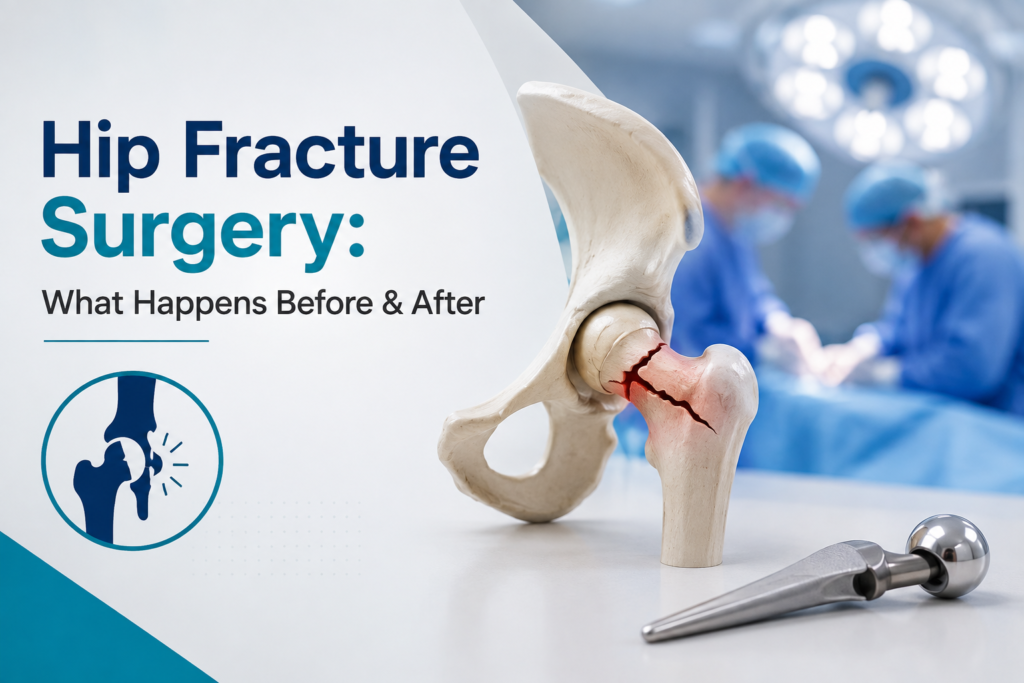
A hip fracture can happen suddenly and can make standing, walking, or even moving in bed extremely difficult. It is particularly common in older adults, especially when the bones have become weaker with age. Prompt medical evaluation and appropriate treatment are important because prolonged immobility can lead to additional health problems.
Hip Fracture Surgery is often recommended when the broken bones need to be realigned and stabilized. The type of surgery depends on the location and pattern of the fracture, the patient’s overall health, and the condition of the hip joint.
What Is a Hip Fracture?
A hip fracture is a break in the upper part of the thigh bone, close to the hip joint. It can occur after a fall or direct injury, while people with weakened bones may experience a fracture even after a relatively minor accident.
Common symptoms include severe hip or groin pain, difficulty standing, inability to put weight on the affected leg, swelling, and the leg appearing shorter or turned outward.
If a hip fracture is suspected, the person should be assessed by a healthcare professional as soon as possible.
When Is Hip Fracture Surgery Needed?
Hip Fracture Surgery is commonly recommended for fractures that are displaced, unstable, or unlikely to heal properly without fixation.
The main goals are to restore the position of the bone, stabilize the fracture, reduce pain, and help the patient return to movement as safely as possible.
Depending on the fracture, surgery may involve screws, plates, nails, or partial or total hip replacement.
What Happens Before Surgery?
Before Hip Fracture Surgery, the medical team performs a detailed assessment to understand both the fracture and the patient’s overall health.
X-rays are usually taken to determine the location and type of fracture. Additional imaging may be recommended when the fracture is complex or difficult to see clearly.
Doctors may also check blood pressure, heart and lung function, blood tests, medications, and other medical conditions before surgery.
Pain relief is provided while the patient waits for treatment. The surgical team will also explain the planned procedure, anesthesia, possible risks, and expected recovery.
Preparing for the Operation
Preparation for Hip Fracture Surgery depends on the patient’s health and the urgency of treatment.
The anesthetist reviews medical history, current medications, allergies, and previous reactions to anesthesia. Some medicines may need to be adjusted before surgery.
The patient is usually asked to follow instructions regarding food, fluids, and medications before the operation.
Because hip fractures can affect older adults significantly, the medical team often takes extra care to manage existing health conditions before proceeding.
What Happens During Surgery?
The exact procedure depends on the type of fracture.
For some fractures, the surgeon realigns the broken bone and secures it using screws, plates, or an intramedullary nail. These implants hold the bone in position while it heals.
If the fracture has severely damaged the part of the hip joint that cannot be repaired effectively, a partial or total hip replacement may be considered.
The operation is performed using appropriate anesthesia, and the surgical approach is selected according to the patient’s condition and fracture pattern.
The First Few Days After Surgery
After Hip Fracture Surgery, the medical team monitors pain, wound healing, circulation, and overall recovery.
Pain medicines are provided as needed, and the surgical wound is checked regularly. Depending on the patient’s condition, movement may be started relatively soon after surgery.
Early and safe mobilization is important because prolonged bed rest can increase the risk of complications such as blood clots, chest infections, muscle weakness, and pressure sores.
A physiotherapist usually helps the patient begin appropriate movements and learn how to walk safely with support.
Physiotherapy and Rehabilitation
Physiotherapy is an important part of Hip Fracture Surgery recovery.
The rehabilitation program may focus on strengthening the leg muscles, improving balance, restoring walking ability, and increasing confidence with movement.
Initially, a walker, frame, or crutches may be required. As strength and stability improve, the patient may gradually reduce dependence on walking aids.
Recovery speed varies considerably. Age, bone health, muscle strength, other medical conditions, and the type of fracture all influence progress.
Returning to Everyday Activities
As recovery progresses, many patients gradually return to everyday activities such as getting dressed, bathing, preparing meals, walking around the home, and going outdoors.
Some activities may require temporary modifications to reduce the risk of another fall.
Your healthcare team may recommend home exercises, walking practice, and changes to the home environment, such as improving lighting, removing loose rugs, and installing support rails where appropriate.
The goal is not simply to heal the fracture but to help the person regain as much independence as possible.
Possible Risks and Complications
Like any major operation, Hip Fracture Surgery has potential risks.
These can include:
- Infection
- Blood clots
- Bleeding
- Chest infections
- Wound problems
- Joint stiffness
- Delayed fracture healing
- Implant-related problems
- Dislocation after certain types of hip replacement
Older adults may also have a higher risk of complications because of existing health conditions.
Your surgeon will explain the specific risks based on your health and the type of surgery being planned.
Supporting Recovery at Home
After Hip Fracture Surgery, following the rehabilitation plan is important for a safe recovery.
Take prescribed medicines as directed, attend follow-up appointments, keep the surgical wound clean as instructed, and complete recommended physiotherapy exercises.
Good nutrition is also important. A balanced diet containing adequate protein, calcium, vitamin D, and other essential nutrients can support overall health and recovery.
Preventing another fall is equally important. Keep walking areas clear, use appropriate footwear, and use walking aids correctly.
When Should You Seek Medical Help?
After surgery, contact your healthcare provider if you notice increasing pain, worsening swelling, fever, wound discharge, unusual redness, new weakness, or difficulty moving the leg.
Sudden chest pain, severe breathing difficulty, or significant swelling and pain in the calf requires urgent medical evaluation.
Do not ignore new or rapidly worsening symptoms during recovery.
Final Thoughts
Hip Fracture Surgery is often an important step toward restoring mobility after a serious hip injury. But successful recovery does not end when the operation is completed.
Pain management, early appropriate movement, physiotherapy, good nutrition, follow-up care, and fall prevention all play an important role in the recovery journey.
Every patient’s recovery is different. With appropriate medical treatment and rehabilitation, many people can gradually regain mobility and return to a more independent daily life.
The goal of hip fracture treatment is not only to repair the injury—it is to help you move forward with confidence.